Chicken Allergy? Why Duck and Lamb Are Your Dog's New Best Friends
You're doing everything right. You've got the good food, the comfy bed, the walks. And yet your dog is still scratching. Still digging at their ears. Still dealing with mystery gut issues that your vet can't quite pin down.
Before you spiral into a deep-dive of worst-case diagnoses, here's something worth knowing: chicken is one of the most common food allergens in dogs. And because chicken is in nearly everything — treats, kibble, dental chews, "mixed protein" bags — your pup might be getting bombarded by it multiple times a day without you realizing it.
The good news? Novel protein dog treats like duck and lamb might be exactly what your dog needs to finally feel better.
What a Dog Food Allergy Actually Looks Like
Food allergies in dogs don't always look like what you'd expect. There's no sneezing fit or hives. Instead, the signs tend to be chronic and easy to write off as "just how my dog is":
- Persistent itching, especially on the paws, belly, or base of the tail
- Recurring ear infections that clear up and come back
- Loose stools, gas, or generally unhappy digestion
- Red, irritated skin or hot spots that don't have an obvious cause
If your dog has had any of these on a rolling basis and you've ruled out environmental allergens (like grass or dust mites), food is worth investigating. According to the AKC, chicken is among the top protein allergens in dogs, along with beef and dairy.
The standard approach is an elimination diet: you strip everything back to a single novel protein and carbohydrate source your dog has never eaten before, then reintroduce foods one at a time to find the trigger. VCA Animal Hospitals recommends running this trial for at least 8–12 weeks to get accurate results. It takes patience, but it's the most reliable way to figure out what's actually going on.
Why "Novel" Protein Is the Whole Point
Here's the core idea behind novel protein diets: your dog's immune system can only react to proteins it's already encountered. A protein your dog has never eaten before? Its immune system has no reason to flag it.
Duck and lamb are classic novel proteins for this reason — most dogs haven't been eating them since puppyhood. They're less common in mainstream pet food, which means a dog that's spent years on chicken-based everything might do just fine on a duck or lamb diet while their body calms down.
One thing worth mentioning: duck and chicken are both poultry, and for dogs with severe chicken allergies, there's a chance of cross-reactivity with duck as well. If your dog has a serious diagnosed allergy, talk to your vet before making the switch. Lamb, on the other hand, is a completely different protein family and is generally very well-tolerated by dogs with poultry sensitivities.
The Treat Problem Nobody Talks About
Here's where a lot of elimination diets fall apart quietly: treats.
You've switched your dog's food to a careful single-protein formula. But then you're still handing out the same old multi-ingredient chews, because hey — those are treats, not food, right?
Wrong, unfortunately. If your dog has a chicken allergy and you're giving them treats that contain "poultry broth," "meat by-products," or a long list of ingredients that may or may not include chicken, you're contaminating the trial. The whole thing needs to be clean for the results to mean anything.
That's where single-ingredient treats come in. When a treat is literally just 100% duck liver or 100% lamb liver and nothing else, you know exactly what your dog is getting. There's no ingredient list to decode, no hidden proteins to worry about.
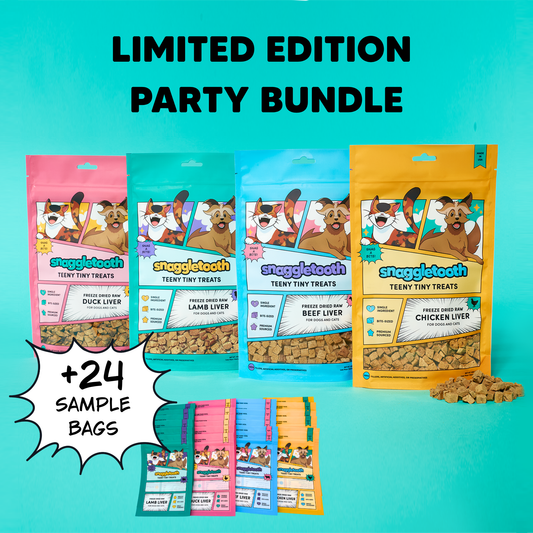
Snaggletooth's Duck Liver Teeny Tiny Treats and Lamb Liver Teeny Tiny Treats are exactly that — single ingredient, freeze-dried, and nothing else. Under 1 calorie per treat, so you can reward generously during training without worrying about the calorie math. Several Snaggletooth customers with chicken-allergic dogs specifically reached for duck and lamb for exactly this reason.
A Practical 4-Week Rotation Plan (After the Elimination Phase)
Once you've done the elimination diet and confirmed your dog's sensitivities, protein rotation can help prevent new allergies from developing down the road. The idea is that long-term exposure to any single protein can, over time, increase the odds of sensitivity. Rotating keeps things varied.
Here's one approach for a dog that's cleared chicken from their diet:
Week 1–2: Beef
Start with a protein your dog has tolerated well historically.
Week 3–4: Lamb
Switch to lamb — a novel protein that's gentle on digestion and satisfying for most dogs.
Week 5–6: Duck
If your dog has handled the others without issue, try duck. (Again, consult your vet if there's a history of serious poultry reactions.)
Week 7–8: Beef again, then rotate back
Keep cycling. The goal isn't to avoid any one protein forever — it's to avoid over-relying on any single one.
This applies to treats, too. Rotate your single-ingredient treat proteins alongside your dog's food.
What to Look for in a Treat During an Allergy Investigation
If you're going through an elimination diet with your dog, here's a simple checklist for treats:
One ingredient only. If the ingredient list is longer than one word, skip it for now.
No "natural flavors." This is a catch-all that can legally include a lot of things, including the protein you're trying to avoid.
Freeze-dried or air-dried single proteins. These formats tend to have the cleanest labels because there's nothing to bind or preserve.
High in protein, low in calories. You'll be using treats constantly during this period for training and reinforcement. Sub-1-calorie treats let you reward freely without blowing your dog's calorie budget.
A Note on Patience
Elimination diets are genuinely tedious. Eight to twelve weeks of careful label-reading, no table scraps, and explaining to every well-meaning person in your household why they cannot give the dog "just one" of their crackers. It's a lot.
But for dogs that have been itchy or uncomfortable for months or years, the payoff is real. Finding the culprit and removing it changes everything — the scratching stops, the ear infections clear up, the stomach settles. Pet owners who've gone through it consistently say they wish they'd done it sooner.
The treat side of things, at least, doesn't have to be complicated. One ingredient, a protein your dog hasn't encountered before, small enough to use generously. That's it.
If you're looking for a good place to start, the Teeny Tiny Treats Bundle includes all four flavors — beef, chicken, duck, and lamb — so you can find which protein your dog responds to best before committing to a full bag of any single one. (And once you know duck and lamb are safe for your pup, you'll have two solid options to rotate between for the long haul.)
Your dog's put up with a lot of itching. They've earned a treat that actually agrees with them.
Always consult your veterinarian before starting an elimination diet, especially if your dog has a history of severe allergic reactions. For more on diagnosing food allergies through dietary trials, see the Purina Institute's guide on elimination diet trials.